



📌 Core Essence: This Jungian archetypes guide examines the inherited, universal psychic structures residing within the collective unconscious. Functioning as archaic cognitive blueprints, they shape human perception, emotional reactivity, and symbolic imagery. Integrating these archetypal dynamics—specifically the Persona, Shadow, Anima, and Animus—allows the conscious ego to dismantle defensive projections and achieve psychological individuation..
Table of Contents
Just as the biological human body carries an evolutionary anatomy—vestigial bones, cranial nerve wiring, and physiological reflexes perfected across hundreds of millennia—the human psyche inherits an ancient structural scaffolding. When an individual experiences an abrupt wave of irrational panic in darkness, falls into obsessive idealization of an unfamiliar partner, or encounters recurring symbolic motifs in dreams during an existential crisis, they are not generating spontaneous neuroses from vacuum. They are colliding directly with the living, autonomous currents of archetypal patterns.
Archetypes are not rigid philosophical concepts or quaint mythological tropes. In operational depth psychology, archetypes function as dynamic energy condensations. They act as invisible psychic organs, filtering sensory data, regulating emotional equilibrium, and dictating behavioral scripts long before the rational ego can formulate conscious intent. To ignore this internal architecture is to live as an involuntary puppet, mistaking automated archetypal compulsions for personal volition.
To bridge depth psychology with everyday reality architecture, this comprehensive Jungian archetypes guide establishes the rigorous cartography of the psyche: moving from the evolutionary reality of the collective unconscious into the four structural pillars of identity, examining the diagnostic spectrum of the twelve classical blueprints, and applying the clinical protocol of active imagination to transmute archetypal possession into sovereign psychological wholeness.
The Subterranean Architecture: Personal vs. Collective Unconscious
To dismantle unconscious behavioral sabotage, one must first master the geological strata of the human mind. Classical Freudian psychoanalysis treated the unconscious almost exclusively as a subterranean dumpster—a repository for repressed sexual instincts, forgotten biographical traumas, and social shame. Carl Jung recognized that this personal unconscious forms merely the superficial topsoil of a vastly deeper psychic ocean.
Beneath the individual layer of personal memories sits the collective unconscious: a transpersonal, phylogenetic treasury of inherited psychic structures common to all human beings, regardless of culture, era, or geographical isolation.
Biological Memory, Phylogenetic Traces, and the Primordial Imprint
The collective unconscious is not mystical speculation or disembodied metaphysics; it is the psychological corollary of biological evolution. Just as migratory birds inherit navigation routes across continents without formal education, and human infants possess an automated palmar grasp reflex the moment they exit the womb, the human brain arrives pre-programmed with evolutionary survival scripts.
These instinctual patterns of perception and reaction are what depth psychology terms archetypes. An archetype in its raw state is an unformed blueprint—a psychic riverbed carved deep into neural pathways over evolutionary epochs. When an individual encounters an intense life event (such as facing death, entering tribal confrontation, encountering a maternal caregiver, or meeting a romantic counterpart), psychic energy floods down that ancient riverbed. The abstract archetype is suddenly activated, constellating into vivid personal thoughts, dreams, physical sensations, and symbolic imagery.
🔬 Scientific Foundation: Modern evolutionary neuroscience and polyvagal theory strongly reinforce Jung’s model of inherited instinctual frameworks. Neuroscientist Jaak Panksepp’s affective neuroscience demonstrated that subcortical mammalian brain structures house primary emotional circuits (SEEKING, FEAR, RAGE, CARE, PLAY, PANIC) that operate autonomously prior to neocortical cognitive appraisal. Similarly, cross-cultural cognitive anthropology reveals that mythological archetypes mirror hardwired neural circuits responsible for kin detection, status hierarchy negotiation, and predator evasion.
Complexes as Autonomous Splinter Psyches
Archetypes do not remain detached in theoretical isolation; they intersect directly with daily lived experience to form psychological complexes. When an environmental event triggers an archetype, the archetype attracts personal experiences, emotional memories, and somatic tension around its magnetic core.
Consider the mother complex. The archetype of the Great Mother provides the universal biological expectation of maternal protection and nurturing. However, if an individual grows up with an emotionally cold, volatile, or rejecting biological mother, that traumatic lived experience crystallizes around the primordial archetypal core. The result is an autonomous emotional complex—a splinter psyche capable of usurping conscious control whenever a situational trigger mimics the original wound.
When an unconscious complex is activated, the rational prefrontal cortex is effectively bypassed. The individual experiences somatic constriction, sudden irrational defensiveness, or overwhelming dread. Within our overarching exploration of Depth Psychology and Inner Cartography, recognizing these complexes as autonomous archetypal entities rather than personal moral defects is the foundational prerequisite for sustainable psychological liberation.
The Four Structural Pillars: Persona, Shadow, Anima-Animus, and the Self

While the collective unconscious contains countless archetypal motifs corresponding to human experience, Jung identified four primary structural pillars that govern conscious identity, defense mechanisms, and spiritual maturation. Understanding these four internal entities forms the foundation of reality architecture.
💡 Insight: The ego is not the commander of the psychic house; it is merely the conscious resident in the front foyer. When an individual mistakes their conscious ego for the totality of their identity, they succumb to archetypal inflation—a dangerous psychological condition where the ego identifies with transpersonal energies, resulting in grandiosity, sudden catastrophic burnout, or debilitating panic attacks.
Structural Mapping of the Inner Psyche
To prevent internal fragmentation and maintain psychological equilibrium, depth psychology maps the psyche through four distinct architectural layers:
🎭 The Persona: The Social Interface
▪️ Structural Function: The adaptive behavioral mask presented to the external collective culture. Engineered from childhood to secure safety, professional status, and social acceptance.
▪️ Healthy Manifestation: A flexible, protective psychological membrane that allows smooth social negotiation without compromising personal integrity.
▪️ Pathological Trap: Total ego-persona identification. When an individual genuinely believes they are their professional title, social status, or polite persona, their authentic emotional life starves in the dark, breeding cynicism and chronic exhaustion.
🌑 The Shadow: The Repressed Instinctual Reservoir
▪️ Structural Function: The inverse of the Persona. Everything rejected by societal conditioning, parental morality, or personal shame is cast into this subterranean vault.
▪️ Diagnostic Signature: Intense emotional projection. Traits you violently despise or judge in others are almost invariably disowned elements of your own Shadow.
▪️ The Gold of the Shadow: The Shadow contains not merely repressed aggression or trauma, but unrefined creative vitality, fierce boundary-setting capacity, and primal passion. Full integration protocols are detailed in our Comprehensive Guide to Shadow Work.
⚖️ The Syzygy: Anima and Animus (The Contrasexual Bridge)
▪️ Structural Function: The psychological mediator between the conscious ego and the deepest recesses of the collective unconscious. The Anima represents the inner feminine archetype within the masculine psyche (governing receptivity, intuition, emotional depth, and connection to soul). The Animus represents the inner masculine archetype within the feminine psyche (governing discernment, logos, focused will, and structured execution).
▪️ Relational Mechanics: Unconscious Anima and Animus dynamics drive obsessive romantic infatuation. When you fall into compulsive limerence, you are not perceiving the actual flesh-and-blood partner; you are projecting your unintegrated contrasexual soul-image onto their face.
▪️ Integration Goal: Reclaiming the projected archetype internally, establishing an inner sacred marriage (Hieros Gamos) of intellect and feeling.
☀️ The Self: The Transcendent Center of Wholeness
▪️ Structural Function: The regulating hub of the entire psyche, encompassing both conscious awareness and the vast unconscious ocean. If the ego is the Earth, the Self is the Sun around which psychic life revolves.
▪️ Symbolic Manifestation: Appears in spontaneous dreams and deep meditative states as geometric mandalas, quadruple structures, radiant gemstones, or the wise internal mentor.
▪️ The Individuation Goal: Shifting the center of psychological gravity from the neurotic, defensive ego to the grounded, serene authority of the Self.
The Twelve Archetypal Blueprints: The Core Jungian Archetypes Guide
Beyond the core structural pillars of the psyche, human behavior organizes around twelve primary dynamic blueprints. Formalized in modern archetypal psychology by Carl Jung and further developed by scholars such as Marie-Louise von Franz and Carol Pearson, these twelve patterns represent distinct expressions of human motivation, fear, and creative potential.
Every archetype exists along an energetic spectrum ranging from mature, conscious sovereignty (Light Integration) to reactive, compulsive degradation (Shadow Pathology). When an archetype operates unconsciously, it acts as a blind spot, driving destructive relationship patterns, career paralysis, or compulsive neuroses.
Quadrant One: Order, Structure, and Civilization
These blueprints govern how consciousness organizes chaos, builds societal frameworks, and maintains environmental stability:
👑 The Ruler
▪️ Core Drive: Sovereignty, order, administrative stewardship, and systemic harmony.
▪️ Light Integration: Benevolent leadership, emotional stability, capacity to hold space for community flourishing without fragile ego defensiveness.
▪️ Shadow Pathology: The Tyrant or The Abdicator. Authoritarian micromanagement, paranoid fear of losing control, brutal suppression of dissent, or sudden paralyzed retreat into helplessness.
🛡️ The Caregiver
▪️ Core Drive: Nurturing, altruistic preservation, maternal/paternal protection of vulnerability.
▪️ Light Integration: Generous, grounded compassion backed by impenetrable personal boundaries; helping others attain their own autonomy.
▪️ Shadow Pathology: The Devouring Martyr. Codependency, manipulative guilt, emotional blackmail, and keeping dependents permanently crippled to feel perpetually needed.
🏛️ The Creator
▪️ Core Drive: Manifestation, architectural vision, giving enduring form to abstract concepts.
▪️ Light Integration: Uncompromising creative discipline, original aesthetic innovation, bridging spiritual ideals into physical artifacts.
▪️ Shadow Pathology: Paralyzing perfectionism, obsessive dissatisfaction, intellectual arrogance, and treating living human relationships as disposable canvas for self-aggrandizement.
Quadrant Two: Connection, Belonging, and Communion
These blueprints regulate the interpersonal bridge, bonding mechanisms, and social integration:
🤝 The Everyman (The Realist)
▪️ Core Drive: Genuine belonging, grounded equality, shared communal resilience.
▪️ Light Integration: Deep emotional accessibility, humble pragmatism, radical honesty without pretension, foundational loyalty.
▪️ Shadow Pathology: Mob conformity, tall-poppy syndrome (destructive envy of excellence), chronic victimhood, and aggressive hostility toward individuality.
🌹 The Lover
▪️ Core Drive: Aesthetic ecstasy, intimate communion, sensual passion, and devotional union.
▪️ Light Integration: Radiance, emotional vulnerability, capacity for profound mutual bonding, celebration of beauty in all physical forms.
▪️ Shadow Pathology: Obsessive limerence, emotional addiction, chronic promiscuity masked as spirituality, and crippling terror of rejection leading to manipulative self-erasure.
🎭 The Jester
▪️ Core Drive: Spontaneity, living in the immediate present, using humor to puncture pomposity.
▪️ Light Integration: Sacred irony, lightening existential dread, joyful play, speaking uncomfortable truth to corrupt authority through comedy.
▪️ Shadow Pathology: The Cynic or The Hedonist. Cruel mockery, chronic avoidance of adult responsibility, emotional nihilism, and using humor as a defensive shield against genuine intimacy.
Quadrant Three: Autonomy, Individuation, and Truth
These blueprints govern the soul’s vertical quest for truth, inner freedom, and transcendental wisdom:
🧭 The Seeker (The Explorer)
▪️ Core Drive: Autonomy, discovering the authentic self, pushing beyond tribal frontiers.
▪️ Light Integration: Fearless psychological self-reliance, intellectual curiosity, living in accordance with personal sovereign truth.
▪️ Shadow Pathology: Chronic wanderlust, inability to commit to relationships or long-term projects, spiritual escapism, and perpetual alienation from community.
🕊️ The Innocent
▪️ Core Drive: Purity, unconditioned trust, simple optimism, alignment with natural grace.
▪️ Light Integration: Resilient faith, emotional clarity, inspiring hope in cynical environments, childlike wonder grounded in adult maturity.
▪️ Shadow Pathology: Willful blindness, toxic positivity, defensive denial of reality, and infantile refusal to confront personal complicity in harm.
📜 The Sage
▪️ Core Drive: Objective truth, conceptual clarity, discernment, contemplation.
▪️ Light Integration: Deep philosophical insight, freedom from dogma, dispassionate analysis that cuts through societal illusions.
▪️ Shadow Pathology: The Armchair Intellectual. Emotional detachment, ivory-tower arrogance, chronic analysis paralysis, and using abstract intellect to avoid visceral somatic feeling.
Quadrant Four: Power, Mastery, and Metamorphosis
These blueprints catalyze active transformation, breaking decayed forms to birth higher orders of consciousness:
⚔️ The Hero (The Warrior)
▪️ Core Drive: Courageous mastery, defending the vulnerable, overcoming insurmountable obstacles.
▪️ Light Integration: Disciplined strength, principled sacrifice, fierce protective capacity, unwavering moral conviction under pressure.
▪️ Shadow Pathology: The Mercenary. Pathological aggression, compulsion to view all human interactions as zero-sum warfare, contempt for softness, and defining self-worth solely through conquest.
🔮 The Magician
▪️ Core Drive: Understanding cosmic laws, psychological transmutation, bridging unseen consciousness into reality.
▪️ Light Integration: Skilled facilitator of transformation, intuitive mastery of energy architecture, catalytic healer who restores vital balance.
▪️ Shadow Pathology: The Dark Sorcerer. Psychological manipulation, gaslighting, exploiting the vulnerabilities of seekers for personal status, and deceptive illusionism.
⚡ The Outlaw (The Rebel)
▪️ Core Drive: Radical liberation, overthrowing oppressive or stagnant structures, shattering hypocrisy.
▪️ Light Integration: Justified revolution, healthy defiance of corrupt systems, clearing dead dogma to make room for living evolution.
▪️ Shadow Pathology: Gratuitous nihilism, destructive rage for its own sake, antisocial boundary violations, and burning down vital institutions without possessing an architectural plan to build anew.
The Individuation Protocol: Active Imagination and Archetypal Dialogue
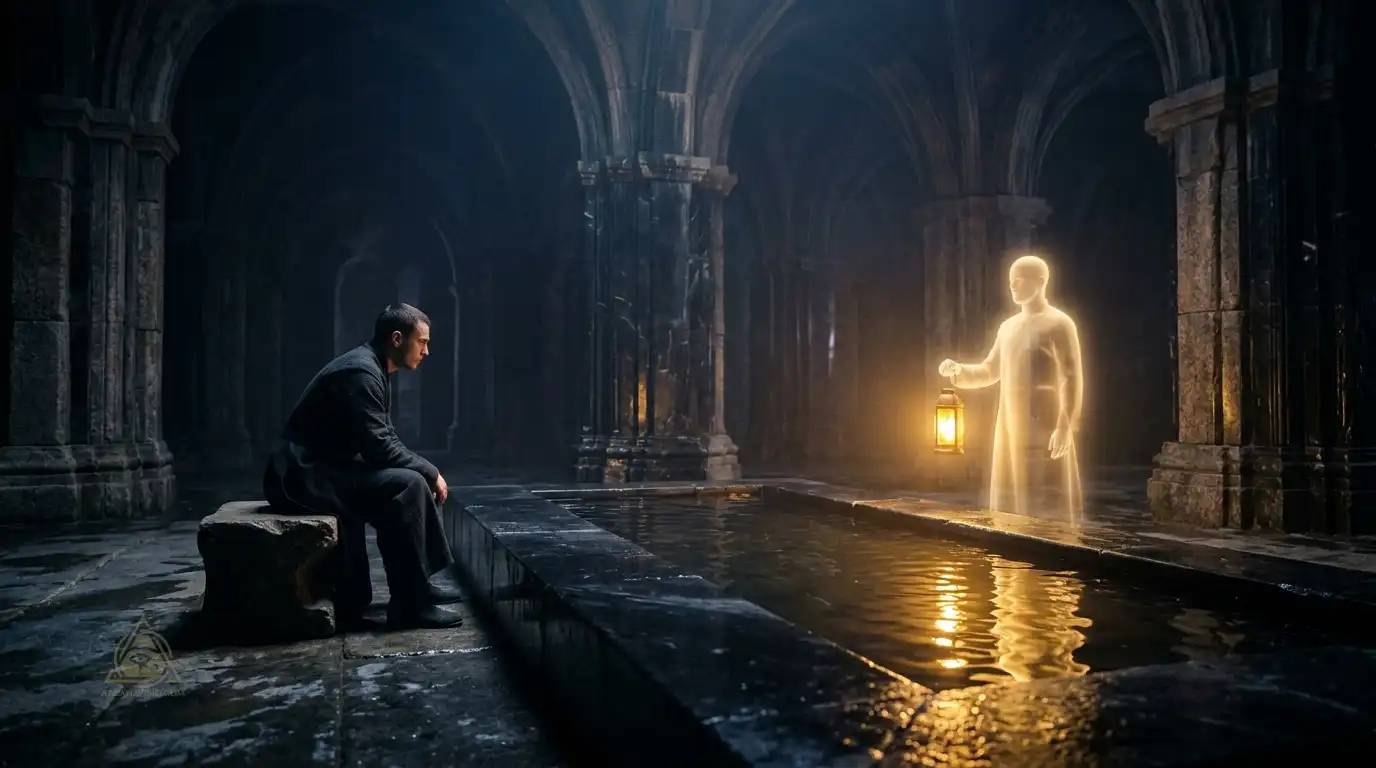
Understanding the taxonomy of archetypes remains sterile intellectual theory unless an individual develops an operative method to engage these autonomous energies directly. Carl Jung designed Active Imagination as the central practical technology of individuation—a rigorous, waking meditation where the conscious ego willingly steps down from its tyrannical throne to enter into an ethical dialogue with unconscious figures.
Active imagination is fundamentally distinct from passive daydreaming or creative fantasy. In passive fantasy, the conscious ego manipulates internal imagery for entertainment, self-soothing, or escapism. In active imagination, the ego acts as a courageous, grounded observer that allows unconscious archetypes to emerge spontaneously with their own autonomous will, speech, and emotional agenda.
🛠️ Practical Protocol: The Four-Step Active Imagination Method
▪️ Step 1: Lowering the Mental Threshold (Abaissement du niveau mental)
Sit in an upright, stable posture in a quiet, dimly lit room. Close your eyes and focus awareness on physical sensations—the weight of your spine, the temperature of inhaled air, the firm contact of your feet against the floor. Lengthen your exhalations to slow your heart rate and shift the autonomic nervous system out of sympathetic vigilance. When cognitive chatter subsides into a receptive, hypnagogic calm, turn inward.▪️ Step 2: Evoking the Autonomous Image
Focus upon a recurring dream fragment, an unexplained emotional knot in your chest, or a persistent interpersonal trigger. Do not invent an image with deliberate fantasy; wait with alert stillness until an archetypal figure, symbolic animal, or landscape manifests spontaneously upon your inner visual field. Observe the figure’s tactile details: posture, clothing, gaze, and physical proximity. Refrain from judging or altering the appearance.▪️ Step 3: Ethical Confrontation and Direct Dialogue
Address the figure mentally or in a quiet whisper: “Who are you, and what truth do you demand that I acknowledge?” Wait attentively. The response will often arrive as a sudden auditory realization, an abrupt shift in somatic pressure, or a sequence of symbolic actions. Do not submissively surrender to the archetype, nor attempt to banish it. Treat the figure as an autonomous sovereign entity, speaking with radical honesty while firmly maintaining your adult ethical boundaries.▪️ Step 4: Concrete Physical Grounding
Active imagination must never conclude in abstract contemplation. The insights gained from the archetypal dialogue must be anchored into physical, three-dimensional reality within twenty-four hours. Write down the verbatim dialogue in an analog journal, produce an unedited physical sketch of the symbol, or make an irrevocable behavioral shift in your daily routine. Grounding honors the encounter and prevents unconscious dissociation.
Frequently Asked Questions About Jungian Archetypes
How do you identify your dominant Jungian archetype?
Your dominant archetype reveals itself through your instinctual behavioral defaults during periods of acute stress, acute crisis, or complete psychological exhaustion. Notice the recurring roles you naturally adopt without conscious calculation: do you compulsively take administrative command (The Ruler), attempt to rescue others at personal expense (The Caregiver), retreat into obsessive analytical research (The Sage), or seek an exit into solitary independence (The Seeker)? Recurring dream figures, foundational childhood fascinations, and your strongest irrational emotional triggers toward other people provide immediate diagnostic indicators of active archetypal complexes.
Can an archetype possess or take over the conscious ego?
Yes. Archetypal possession occurs when the conscious ego becomes completely overwhelmed by and identified with a single archetypal energy. A politician who genuinely believes they are the infallible savior of their nation has fallen under possession by the Warrior or Ruler archetype; an individual overtaken by uncontrollable destructive rage is possessed by the Shadow; a seeker completely consumed by aesthetic and romantic obsession is possessed by the Lover. When possessed, the individual loses personal volition, operating as a biological automaton executing archaic collective scripts.
What is the difference between an archetype and a psychological complex?
An archetype is an impersonal, universal structural blueprint inherited within the collective unconscious, shared across all human culture. A complex, conversely, is an individual, highly personal psychological entity formed when lived biographical experience and emotional trauma attach to that primordial archetypal core. The Great Mother is a universal archetype; your specific, highly emotionally charged reactions, defenses, and expectations regarding maternal figures form your personal Mother Complex.
How does Anima and Animus integration heal relationship projection?
When the contrasexual archetype (Anima in men, Animus in women) remains entirely unconscious, the psyche projects this idealized inner counterpart outward onto living romantic partners. This causes extreme limerence, followed by profound disillusionment, resentment, and hostility when the actual human partner fails to embody the divine archetypal projection. By consciously integrating your inner masculine or feminine attributes through dreamwork and emotional self-containment, you withdraw these unrealistic spiritual demands from your partner, allowing genuine, mature human intimacy to replace compulsive projection.
Is active imagination safe for deep trauma work?
Active imagination requires an established, stable ego-consciousness capable of holding emotional boundaries without fragmenting. For individuals experiencing acute psychotic states, borderline dissociation, or severe unintegrated post-traumatic stress, diving into the unfiltered unconscious can trigger overwhelming emotional flashbacks or psychic flooding. In such instances, individuals should prioritize bottom-up somatic nervous system regulation and work under the direct clinical supervision of a qualified depth psychologist before attempting independent archetypal confrontation.
The Alchemical Return: From Archetypal Fragmentation to Integrated Wholeness
The journey through the archetypal architecture of the psyche is not an intellectual exercise in categorization; it is an alchemical Magnum Opus of personal integration. To remain unconscious of the archetypal forces moving through your nervous system is to live as an accidental passenger inside an inherited machine, tossed between the rigid social demands of the Persona and the volatile, disruptive eruptions of the Shadow.
When you step consciously into the work of individuation, the disparate, warring factions of your inner world begin to organize into coherent harmony. The Shadow ceases to operate as an external adversary and reveals its hidden treasure of primal vitality and authentic boundary-setting power. The Anima and Animus cease to distort your human relationships through impossible romantic projections, transforming into an internal fountain of creative intuition and clear, structured discernment. The fragmented ego gradually aligns with the quiet, incorruptible authority of the Self.
Reality architecture begins in the temple of the psyche. As explored throughout this Jungian archetypes guide, transforming blind instinctual drives into conscious alchemical power allows you to reclaim sovereignty over your personal destiny and embody the enduring wholeness that has waited within your collective inheritance from the dawn of human consciousness.
Enter the Arcana Visio Sanctum
Deepen your exploration of depth psychology, archetypal systems, and inner alchemy through our dedicated study spaces:
- Patreon — The Seeker ($9 / month): Receive exclusive monthly access to our high-resolution PDF Grimoires (comprehensive 9-page visual dossiers exploring archetypal maps, esoteric symbolism, and practical psychological integration frameworks), along with complete study guides and private Discord sanctum access at patreon.com/c/ArcanaVisio.
- Patreon — The Adept ($29 / month): Advance into operative psychological alchemy with guided somatic voiceover practices, 14-day transformative intensive curricula, and clinical active imagination audio protocols.
- NAVIGATOR: 12 Keys to Yourself: Ready to decode the exact archetypal blueprints encoded in your unique natal geometry? Order your personalized, high-ticket Destiny Matrix diagnostic manual on Etsy or explore the complete methodology at arcanavisio.com/navigator/.
