


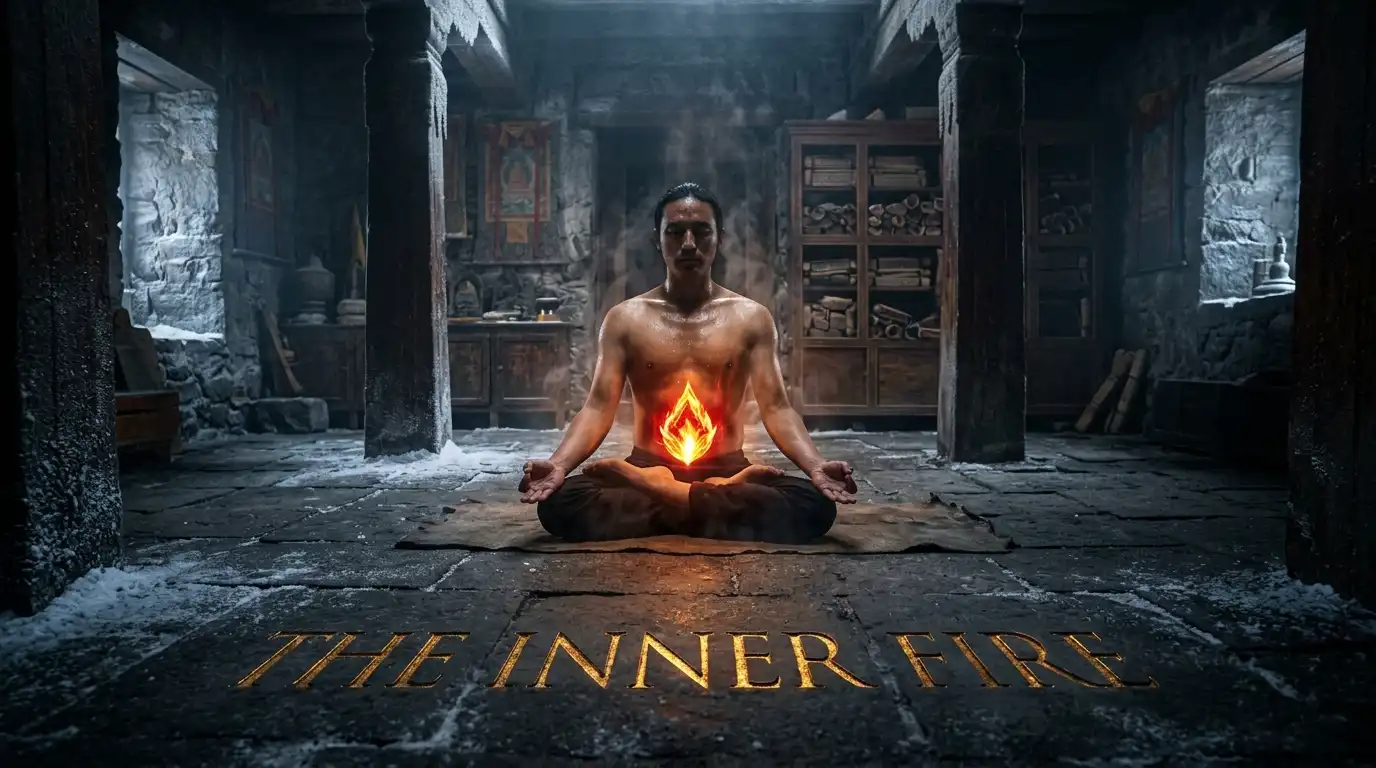

📌 Core Essence: This comprehensive tummo breathwork guide examines the ancient Tibetan practice of Inner Fire (Chandali), where diaphragmatic vase breathing, somatic visualization, and muscular locks ignite endogenous thermogenesis. By stimulating brown adipose tissue and modulating autonomic nervous system tone, practitioners transmute stagnant physiological tension into radiant vital heat and spiritual clarity.
For centuries, Western travelers in the high Himalayas returned with accounts that defied classical thermodynamics: hermits seated naked on frozen mountain ridges at fourteen thousand feet, drying wet, ice-soaked sheets on their bare skin through sheer internal heat. Conventional medical science dismissed these reports as pious folklore or fraudulent thermal insulation.
The human body, modern physiology insisted, is a rigid homeostat. Core body temperature is regulated within narrow physiological parameters by the autonomic hypothalamus; voluntarily raising baseline temperature in sub-zero conditions was deemed physiologically impossible.
That consensus collapsed in the late twentieth century. Laboratory investigations led by Harvard medical researchers confirmed that adept practitioners of Tummo—the ancient Tibetan contemplative technology of Chandali (the Fierce Inner Woman)—could elevate peripheral skin temperatures by as much as seventeen degrees Fahrenheit while sustaining core metabolic composure in freezing chambers.
Yet the true purpose of Tummo was never bodily survival in alpine blizzards. In classical Vajrayana Buddhism and the Six Yogas of Naropa, physical heat is merely a metabolic byproduct—the physical smoke indicating that an alchemical fire has ignited within the subtle nervous system.
Tummo operates as an operative technology of somatic transmutation. By combining diaphragmatic vase retention (Kumbhaka), neuro-muscular locks (Bandhas), and precise somatic visualization, the practitioner compresses raw instinctual and sexual energy at the navel center, transmuting chronic emotional contraction into an ascending pillar of radiant, non-dual consciousness.
To bridge this esoteric discipline with modern somatic reality architecture, one must dismantle both magical thinking and clinical cynicism. This comprehensive guide establishes the neurobiology of endogenous thermogenesis, maps the subtle energetic channels governing inner heat, distinguishes classical Tummo from modern bio-hacking adaptations, and details the four-step protocol required to cultivate the inner fire safely.
Table of Contents
The Sacred Physiology of the Tummo Breathwork Guide

To practice Tummo without succumbing to superstition, one must understand that spiritual illumination rests upon a biological engine. The human body does not generate heat by magic; it generates thermal energy through cellular metabolism, autonomic signaling, and mitochondrial respiration.
What makes the contemplative discipline outlined in this tummo breathwork guide so revolutionary to modern medicine is its capacity to voluntarily recruit deep neuro-endocrine pathways that conventional science long believed operated strictly outside conscious control.
Brown Adipose Tissue, Mitochondrial Thermogenesis, and Norepinephrine
The primary biological furnace utilized in somatic heat generation is Brown Adipose Tissue (BAT). Unlike common white adipose tissue, which stores excess calories as passive lipids, brown fat exists solely to burn energy and generate non-shivering thermogenesis.
Packed with dense clusters of iron-rich mitochondria, brown fat cells contain a specialized transmembrane protein known as Thermogenin or Uncoupling Protein 1 (UCP-1). When activated, UCP-1 uncouples the mitochondrial respiratory chain from ATP synthesis. Instead of trapping metabolic energy into cellular chemical bonds, the proton gradient across the inner mitochondrial membrane collapses, releasing the energy directly as pure thermal heat into the bloodstream.
In ordinary adults, brown fat deposits remain largely dormant around the neck, upper chest, thoracic spine, and kidneys. Classical Tummo stimulates these specific anatomical regions through the forceful retention of diaphragmatic pressure (Vase Breath) combined with perineal contraction. This mechanical compression triggers an acute release of norepinephrine from sympathetic nerve terminals, igniting rapid intracellular lipolysis and firing up the mitochondrial furnace within minutes.
The Respiratory Switch: Intermittent Hypoxia and Vagal Co-Activation
The second physiological pillar of inner fire is the deliberate manipulation of arterial blood gases. During the rhythmic compression phase of Tummo, periods of hyper-oxygenation are coupled with prolonged breath retention (Kumbhaka).
This sequence creates transient, controlled intermittent hypoxia. Far from damaging neural tissues, short bouts of regulated hypoxia activate Hypoxia-Inducible Factor 1-alpha (HIF-1α), stimulating cellular autophagy, down-regulating systemic inflammatory cytokines, and triggering the dilation of capillary beds. Blood vessels that remain chronically constricted by urban stress suddenly expand, flooding peripheral extremities with warm, oxygenated blood.
🔬 Scientific Foundation: In a landmark study published by Dr. Herbert Benson of Harvard Medical School, researchers journeyed to remote monasteries in Upper Dharamsala to record the physiological parameters of Tibetan monks practicing Tummo. The team documented increases in peripheral skin temperatures of up to 17°F (9.4°C) in the fingers and toes, while core metabolic rates spiked by over 60%. Subsequent neuroimaging research conducted by Dr. Maria Kozhevnikov at the National University of Singapore confirmed that Tummo involves a unique dual-activation state: forceful diaphragmatic breathing spikes sympathetic arousal and metabolic heat, while continuous meditative visualization activates the parasympathetic insular cortex, preventing cardiac strain and inducing deep somatic tranquility.
Within our overarching exploration of Somatic Alchemy and Nervous System Regulation, Tummo represents the pinnacle of autonomic self-sovereignty: the conscious capacity to merge sympathetic fire with parasympathetic stillness.
The Energetic Architecture: Nadis, Chakras, and the Navel Flame
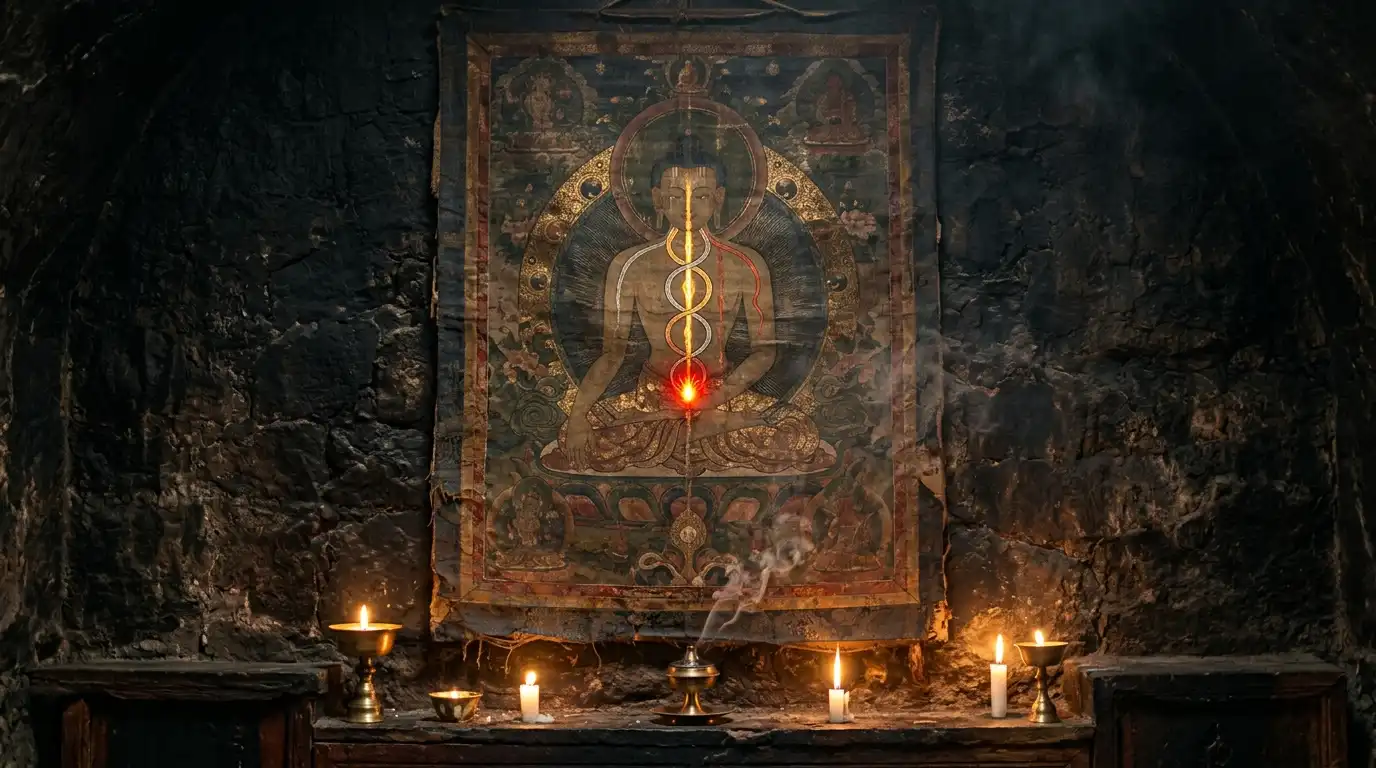
While Western physiology maps the physical correlates of thermogenesis in mitochondrial uncoupling and autonomic signaling, the Vajrayana contemplative tradition maps the internal energetic architecture through the subtle body (Vajradeha).
In this classical system, breath and mind are recognized as inextricably linked: mind rides upon the subtle winds (Prana or Lung), which circulate through an intricate network of tens of thousands of energetic pathways (Nadis). When these winds circulate erratically through peripheral channels, the mind experiences anxiety, emotional reactivity, and obsessive discursive thought.
The core mission of this tummo breathwork guide is to gather these scattered winds from the outer channels, force them into the central energetic conduit, and transmute them into a vertical pillar of non-dual clarity.
The Three Sacred Conduits: Sushumna, Ida, and Pingala
The subtle body organizes around three primary vertical channels that run parallel to the physical spinal column:
▪️ The Central Channel (Avadhuti or Sushumna):
Running from the perineum straight up through the core of the body to the crown of the head, the central channel is the axis of awakened consciousness. In ordinary individuals, the central channel is collapsed, dormant, and constricted at each chakra junction by tight energetic knots (Granthis).
▪️ The Lunar Channel (Lalana or Ida):
Situated to the left of the spine, pale white in color, this conduit carries cooling, lunar, reflective, and feminine energy. When overactive, it manifests as lethargy, depressive withdrawal, and somatic coldness.
▪️ The Solar Channel (Rasana or Pingala):
Situated to the right of the spine, deep red in color, this conduit carries heating, solar, aggressive, and masculine energy. When overactive, it manifests as inflammatory impatience, chronic tension, and mental agitation.
The secret technology of Tummo consists of using diaphragmatic pressure to siphon the energies of both left and right channels into the bottom of the central channel, forcing the two polar currents to collide and combust.
The Four Alchemical Reservoirs of Inner Heat
Once the subtle breath enters the central channel, the transmutation unfolds across four primary chakra hubs:
🔥 The Navel Wheel (Nirmanakaya — 64 Spokes)
▪️ Location & Geometry: Four finger-widths below the anatomical navel, at the core of the pelvic bowl.
▪️ Alchemical Role: The crucible of fire. Here, the practitioner visualizes the seed syllable of Chandali—a microscopic, needle-thin vertical filament of pure, concentrated crimson flame, intensely hot, vibrating with raw creative and sexual potency.
▪️ Somatic Activation: Compressed from above by the descending diaphragm and locked from below by the pelvic floor, the navel flame ignites, transforming stored somatic tension into physical heat.
💛 The Heart Wheel (Dharmakaya — 8 Spokes)
▪️ Location & Geometry: The center of the chest along the spine, facing downwards like an inverted lotus.
▪️ Alchemical Role: The vault of consciousness. The heart center houses the indestructible subtle drop of mind.
▪️ Somatic Activation: As the flame ascends from the navel, it pierces the restrictive heart knots, transmuting chronic grief, relational defense mechanisms, and existential dread into unconditional golden luminosity.
🌊 The Throat Wheel (Sambhogakaya — 16 Spokes)
▪️ Location & Geometry: The hollow of the throat, facing upwards like a chalice.
▪️ Alchemical Role: The governor of metabolic rhythm.
▪️ Somatic Activation: The rising thermal wave passes through the thyroid and cervical plexus, pacifying discursive mental chatter and establishing complete silence in the rational intellect.
❄️ The Crown Wheel (Mahasukhakaya — 32 Spokes)
▪️ Location & Geometry: The apex of the cranium, facing downwards.
▪️ Alchemical Role: The lunar reservoir. In esoteric anatomy, the crown houses the subtle white drop (Bodhicitta), symbolized by the inverted syllable Ham, cold and crystalline.
▪️ Somatic Activation: Touched by the intense heat of the ascending navel flame, the crown drop melts. A cascading stream of warm, blissful nectar flows downward through all four centers, saturating every nerve fiber and cellular membrane with non-dual ecstasy.
💡 Insight: The critical failure of most modern Western breathwork practitioners is practicing forceful hyperventilation without neuromuscular containment. If you breathe intensely without engaging the pelvic floor lock (Mula Bandha) and the throat lock (Jalandhara Bandha), the vital heat cannot enter the central channel. Instead, it rises as uncalibrated hot blood into the brain, causing dizziness, adrenal exhaustion, and acute panic. Tummo is not about hyperventilating; it is about hydraulic containment.
Classical Tummo vs. The Wim Hof Method: Structural Distinctions

In contemporary health and athletic subcultures, Tummo is frequently conflated with the Wim Hof Method. Dutch extreme athlete Wim Hof famously credited Tibetan Tummo as the initial inspiration for his extraordinary feats of cold endurance. However, while both disciplines manipulate respiratory physiology to alter autonomic parameters, their underlying mechanics, psychological postures, and ultimate objectives diverge sharply.
Understanding these distinctions in this tummo breathwork guide prevents practitioners from confusing an acute physiological stress response with authentic internal energetic transmutation.
The Structural Blueprint: Bio-Hack vs. Alchemical Sadhana
To select the appropriate methodology for your somatic development, examine how each system interacts with the nervous system:
❄️ The Wim Hof Method: The Exogenous Physiological Bio-Hack
▪️ Primary Respiratory Mechanic: Prolonged cyclical hyperventilation (30 to 40 deep diaphragmatic breaths) followed by an unforced exhalation breath retention on empty lungs, concluding with a 15-second recovery inhalation lock.
▪️ Neuro-Chemical Signature: Induces acute respiratory alkalosis (blowing off arterial carbon dioxide, causing blood pH to spike above 7.6). This triggers significant systemic vasoconstriction, followed by a massive surge of endogenous epinephrine (adrenaline) and cortisol from the adrenal medulla.
▪️ Physiological Objective: Acute immune modulation, down-regulation of pro-inflammatory cytokines, cold water habituation, and mental grit.
▪️ Somatic Limitation: Because the retention occurs on empty lungs without muscular locks (Bandhas), the practice relies on a sympathetic stress surge. If practiced excessively by individuals with dysregulated nervous systems, it can exhaust the adrenal glands and aggravate chronic anxiety.
🔥 Classical Tibetan Tummo: The Endogenous Alchemical Transmutation
▪️ Primary Respiratory Mechanic: The Ninefold Cleansing Breaths to clear peripheral channels, followed by forceful Vase Breathing (Kumbhaka)—inhaling deeply into the lower pelvic basin, swallowing down the breath, and compressing it with the pelvic floor lock (Mula Bandha).
▪️ Neuro-Chemical Signature: Induces controlled intermittent hypercapnia and cellular hypoxia under high internal pressure. Norepinephrine is released locally in brown adipose tissue without triggering a panicked full-body sympathetic emergency.
▪️ Physiological Objective: Generating sustained metabolic thermogenesis while activating the parasympathetic insular cortex, stabilizing heart rate variability (HRV), and maintaining profound somatic stillness.
▪️ Spiritual Objective: Transmuting instinctual drive and somatic contractions into an ascending pillar of non-dual consciousness (Rigpa), culminating in the dissolution of ego-grasping.
Synthesizing Science and Esoteric Depth
The Wim Hof Method is a magnificent modern protocol for physical resilience, cold water adaptation, and acute immune resets. It is an exterior, physical gateway.
Classical Tummo, conversely, is an interior architectural transmutation. It does not treat the body as a machine to be subjected to extreme environmental stress; it treats the nervous system as an alchemical temple where prana, somatic tension, and consciousness merge into radiant sovereignty.
By applying modern understanding of autonomic regulation to classical Tibetan vase breathing, the modern seeker gains access to both: unbreakable biological vitality and profound contemplative depth.
The Four-Step Classical Tummo Protocol
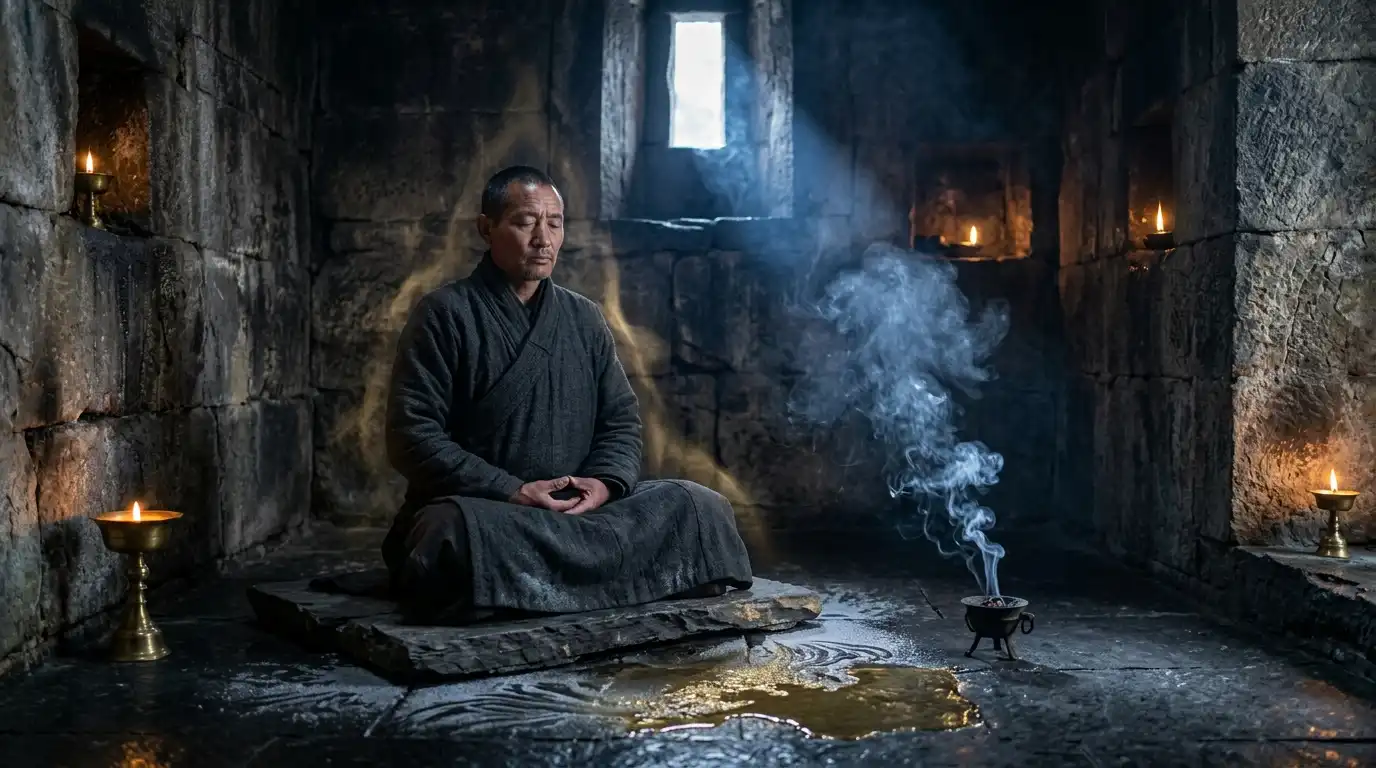
Theoretical knowledge of subtle channels and mitochondrial thermogenesis remains sterile without physical somatic execution. The following clinical protocol synthesizes classical Tibetan Vajrayana instructions with modern trauma-informed somatic awareness.
Practice this sequence seated in a stable, upright posture (Full Lotus, Half Lotus, or firmly grounded on a straight-backed chair) with your spine elongated and your pelvis tilted slightly forward. Ensure your stomach is empty; avoid practicing within two hours of a meal.
🛠️ Practical Protocol: The Four-Step Classical Tummo Transmutation
▪️ Step 1: The Ninefold Cleansing Breaths (Lung Sang)
Before igniting internal heat, the peripheral channels must be cleared of stagnant metabolic and emotional debris.
- Raise your right hand, press your right ring finger against your right nostril to close it, and inhale deeply, slowly, and smoothly through the left nostril (the lunar channel), drawing in cool, radiant white light.
- Close the left nostril with your right index finger, open the right nostril, and exhale forcefully, visualizing all accumulated attachment, greed, and somatic anxiety expelled as dark grey smoke. Repeat this cycle three times.
- Switch hands. Inhale through the right nostril (the solar channel), drawing in warm, radiant red light. Exhale forcefully through the left nostril, expelling all stored anger, chronic resentment, and inflammatory tension as dark red smoke. Repeat three times.
- Inhale deeply through both nostrils simultaneously, drawing pure golden prana down both channels to their base. Exhale forcefully through both nostrils, expelling all existential confusion, chronic numbness, and subconscious apathy as black smoke. Repeat three times.
▪️ Step 2: The Diaphragmatic Vase Breath (Kumbhaka)
Vase breathing is the foundational physical engine of inner fire. It compresses the breath into the lower pelvic basin like water sealed within an earthen jar.
- Inhale deeply and smoothly through both nostrils, expanding your lower abdomen first, followed by your lateral ribs, and finally your upper chest. Do not heave your shoulders.
- At the peak of inhalation, swallow gently. This subtle swallowing motion pushes the diaphragmatic muscle down into the abdominal cavity, compressing the inhaled prana downward.
- Instead of holding the breath in your throat or chest, pack the air down into your pelvic bowl, four finger-widths below your navel. Your lower abdomen should feel firm, compact, and rounded like a ceramic vase, while your chest and facial muscles remain completely relaxed.
▪️ Step 3: Activating the Triple Energetic Locks (Bandhas)
To prevent the compressed energy from dissipating outward, engage the neuromuscular locks:
- The Root Lock (Mula Bandha): Gently contract and pull upward the muscles of the pelvic floor and perineum. This draws the subtle ascending wind up from below, meeting the downward pressure of the diaphragm.
- The Abdominal Lock (Uddiyana Bandha): Maintain firm, isometric inward and upward engagement of the lower abdominal wall below the navel, sealing the pressure chamber.
- The Throat Lock (Jalandhara Bandha): Elongate the back of your neck and lower your chin slightly toward your sternum, swallowing once to lock the glottis without creating choking tension.
Hold this pressurized containment comfortably for 15 to 45 seconds. Never strain to the point of gasping or dizziness. When you need to exhale, release the throat lock first, then exhale slowly, smoothly, and silently through your nose, maintaining the internal root lock.
▪️ Step 4: Kindling the Navel Flame and the Alchemical Ascent
Breath pressure provides the oxygen; precise somatic visualization provides the electrical spark.
- While holding the vase breath in Step 3, direct your inward visual and somatic awareness to the intersection of the channels four finger-widths below the navel.
- Visualize a microscopic, vertical needle of pure, concentrated crimson fire—no thicker than a strand of hair, intensely bright, radiating searing heat. With each subtle contraction of the pelvic floor, imagine bellows fanning this seed flame.
- Feel the flame ignite into tangible, biological warmth. As you hold the retention, the flame begins to spiral upward inside the hollow central channel like a golden filament of molten lightning.
- Trace the heat as it pierces the heart wheel (melting emotional rigidity into love), rushes through the throat wheel (stilling mental chatter), and strikes the crown wheel. Feel the cold crystalline drop at the crown melt, showering warm, ecstatic golden nectar back down through every nerve, capillary, and muscle fiber in your body.
- Rest in the afterglow. Discontinue forceful breathing and sit in silent, non-dual somatic stillness for five to ten minutes, allowing the autonomic nervous system to integrate the heightened coherent charge.
Frequently Asked Questions About Tummo Breathwork
Is Tummo breathwork dangerous for beginners?
Tummo is an intense, high-voltage somatic practice. When practiced correctly according to this tummo breathwork guide, it is profoundly rejuvenating and safe for healthy individuals. However, for those with severe unmanaged hypertension, cardiovascular disease, detached retinas, active psychosis, or early pregnancy, forceful breath retention under pressure is contraindicated. Beginners should master gentle diaphragmatic breathing and pelvic floor awareness before attempting prolonged vase retentions or intense thermal visualizations.
How does Tummo actually raise core body temperature?
Tummo elevates body temperature through two coordinated mechanisms. Mechanically, the diaphragmatic vase breath and pelvic contractions activate sympathetic nerve terminals supplying brown adipose tissue (BAT), stimulating the uncoupling protein UCP-1 to convert cellular energy directly into non-shivering thermogenesis. Neurologically, deep somatic visualization activates the insular cortex and hypothalamus, triggering peripheral vasodilation and resetting the body’s internal thermal set-point.
What is the difference between Vase Breathing and simple breath holding?
Simple breath holding (Apnea) involves closing the glottis and waiting passively while carbon dioxide accumulates in the bloodstream. Vase Breathing (Kumbhaka) is an active, dynamic neuromuscular containment. The practitioner swallows down the breath, drives the diaphragm downward, engages the pelvic floor upward, and compresses the air into the lower abdominal cavity under physical pressure. This mechanical compression pressurizes the abdominal aorta and vena cava, altering hemodynamics and forcing subtle energy into the central spinal channel.
Can Tummo heal chronic fatigue and nervous system dysregulation?
Yes, when practiced with calibrated somatic pacing. Chronic fatigue and functional burnout frequently stem from a frozen autonomic nervous system—a persistent dorsal vagal shutdown where mitochondrial respiration is depressed. Tummo acts as a powerful biological defibrillator. By combining controlled intermittent hypoxia with parasympathetic heart-rate stabilization, it wakes up dormant mitochondrial pathways, clears cellular inflammation, and restores metabolic vitality.
Do I need to be in the cold or take ice baths to practice Tummo?
No. Classical Tibetan yogis did not practice Tummo to show off in ice; they practiced in freezing Himalayan caves because cold environments provide immediate external feedback on whether the internal fire is truly burning. You can successfully ignite Tummo in a warm room, a temperate climate, or while seated in an urban apartment. In fact, beginners should always learn the technique in a warm, sheltered environment before testing their thermal sovereignty against external cold water or winter air.
From Somatic Freeze to Sovereign Radiance
In an era characterized by chronic disembodiment, cognitive overstimulation, and autonomic burnout, millions of individuals live in a state of somatic hypothermia—psychologically agitated yet biologically frozen, cut off from the primal vital fire of their own physical vessels.
The ancient science of Tummo offers the ultimate antidote. It reminds us that the human body is not a fragile biological cage to be medicated or escaped; it is an alchemical laboratory capable of transmuting the densest instinctual tension into radiant spiritual sovereignty.
By mastering the breath, sealing the energy channels, and fanning the sacred flame at the navel center, you reclaim your birthright as a reality architect. You dissolve the cold, isolating walls of fear, and awaken the unshakeable, self-sustaining fire that has waited within your cellular core from the beginning of time.
Enter the Arcana Visio Sanctum
Deepen your exploration of internal alchemy, somatic neuroscience, and reality architecture through our dedicated study spaces:
- Arcana Visio Sanctum on Patreon: Join our private study community for practitioners exploring depth psychology, internal alchemy, and reality architecture. Access monthly visual PDF Grimoires, advanced operative protocols, guided somatic audio practices, and ongoing research archives at patreon.com/c/ArcanaVisio.
- NAVIGATOR: 12 Keys to Yourself: Ready to decode the exact financial triad, karmic tail, and core life-purpose codes encoded in your unique natal geometry? Order your personalized, high-ticket Destiny Matrix diagnostic manual on Etsy or explore the complete methodology at arcanavisio.com/navigator/.
- The Arcana Visio Dispatch (Newsletter): Receive our weekly long-form essays, practical somatic protocols, and private releases on depth psychology, cosmic cycles, and consciousness architecture directly to your inbox via arcanavisio.substack.com.
