




📌 Core Essence: Subconscious mind architecture represents the neural, symbolic, and archetypal programming that governs ninety-five percent of human perception, emotional reactivity, and habitual behavior. By combining Jungian active imagination with the neurobiology of lucid dreaming, practitioners systematically access the hypnagogic theta state (4–8 Hz) to reprogram limiting psychic scripts directly within the nervous system.
For decades, the commercial self-help industry promoted an alluring yet biologically flawed doctrine: that repeating positive affirmations in front of a mirror can effortlessly overwrite lifelong behavioral conditioning. Millions of individuals repeated phrases of wealth, health, and calm, only to find themselves ambushed hours later by compulsive anxiety, chronic procrastination, or irrational self-sabotage. The failure was not a lack of conscious willpower; it was a fundamental misunderstanding of neurological hierarchy. The conscious ego accounts for barely five percent of our cognitive bandwidth, while the subconscious basal ganglia, limbic circuits, and default mode network operate as the silent, autonomic operating system running ninety-five percent of our lives.
When conscious intent clashes with subterranean subconscious programming, the subconscious inevitably triumphs. As Carl Jung observed throughout decades of clinical observation, until you make the unconscious conscious, it will direct your life and you will call it fate. The subconscious mind does not speak in abstract intellectual prose or synthetic linguistic declarations; it speaks in the archaic, visceral language of emotional affect, somatic tension, and multi-dimensional symbolic imagery—the exact currency exchanged every night within the theater of dreams.
Every evening, as brainwave oscillations decelerate from waking beta rhythm (13–30 Hz) into the hypnagogic alpha-theta threshold (4–8 Hz), the rigid analytical barrier of the conscious ego dissolves. In this fleeting gateway between waking alertness and rapid eye movement (REM) sleep, the critical filter of the prefrontal cortex relaxes, opening a direct bi-directional channel into the deep associative memory networks of the psyche. In the ancient mystery schools and within the alchemical discipline of The 7 Hermetic Principles, this oneiric space was recognized not as an involuntary hallucination, but as an operative, protected laboratory for internal transformation.
To architect reality from the inside out, we must move beyond passive dream interpretation and master the mechanics of subconscious mind architecture through the rigorous intersection of cognitive neuroscience and depth psychology. In this comprehensive foundational guide, we will analyze the neurological circuitry of the subconscious operating system, decode the neurobiology of lucid dreaming, map the four cognitive states of consciousness, and execute a four-step neuro-oneiric protocol to consciously rewrite your behavioral blueprints while your body rests in profound somatic stillness.
The Blueprint of Consciousness: Why Subconscious Mind Architecture Dictates External Reality
To understand why human behavior frequently sabotages conscious goals, one must analyze the biological division of labor inside the brain. The conscious mind, anchored predominantly in the prefrontal cortex, is a serial processor: it handles abstract logic, deliberate planning, and linguistic analysis at a rate of approximately forty to sixty bits of information per second. In stark contrast, the subconscious—governed by the basal ganglia, the amygdala, the hippocampus, and the cerebellum—is a massive parallel processor capable of computing up to eleven million bits per second.

The Operating System of the Psyche: Basal Ganglia, Amygdala, and Default Mode Network
The subconscious is not a mystical fog; it is an efficient biological energy-conservation engine. The human brain consumes twenty percent of the body’s metabolic glucose despite representing barely two percent of its physical weight. To prevent energetic exhaustion, the brain automates repeated cognitive sequences through long-term potentiation, shifting them from the resource-intensive prefrontal cortex into the automated circuitry of the basal ganglia.
Every emotional reflex, defensive trigger, posture habit, and conversational rhythm is hardwired into this architecture. Operating alongside these motor loops is the Default Mode Network (DMN)—a constellation of interconnected brain regions that activates whenever we are not engaged in an active, goal-directed task. The DMN generates our automatic internal monologue, constantly referencing historical autobiographical memories to construct a defensive, self-referential sense of ego identity. When your subconscious mind architecture is anchored in chronic scarcity or unresolved emotional wounds, as explored in The Complete Guide to Shadow Work, the DMN continuously projects those historical defensive scripts onto future probabilities, creating repetitive behavioral traps.
Carl Jung’s Active Imagination: The Bridge Between Ego and Unconscious Archetypes
During his intense confrontation with the unconscious between 1913 and 1919—documented in the Red Book—Carl Jung discovered that the conscious ego cannot alter subconscious scripts through unilateral intellectual demand. Attempting to force the subconscious into submission through mental willpower is like shouting orders at an automated computer server in a foreign language.
Jung developed the method of Active Imagination as a bilateral diplomatic bridge. In active imagination, an individual intentionally quiets the waking ego, enters a relaxed hypnagogic state, and allows spontaneous symbolic imagery to emerge into consciousness without rational censorship. Instead of passively analyzing the images, the ego actively engages with them: conversing with dream figures, entering subterranean landscapes, and negotiating with autonomous psychic complexes. Modern neuro-imaging confirms that because the emotional limbic system cannot differentiate between an intensely imagined sensory event and an actual physical occurrence, active imagination creates tangible structural changes in synaptic connectivity.
🔬 Scientific Foundation: Synaptic neuroplasticity research demonstrates that semantic affirmations engage only Broca’s and Wernicke’s language areas in the left hemisphere, which are easily dismissed by the prefrontal cortex’s critical gatekeeping filters. However, when an individual engages rich multi-sensory archetypal imagery in an alpha-theta brainwave state (4–8 Hz), the brain activates the visual occipital cortex, the motor strip, and the insular cortex simultaneously. This distributed neural firing releases brain-derived neurotrophic factor (BDNF), permanently rewiring subconscious emotional circuits far more rapidly than intellectual analysis.
The Neurobiology of Lucid Dreaming: Activating Prefrontal Awareness in the Oneiric Realm
While active imagination operates during waking contemplation, the most potent gateway for restructuring subconscious programs occurs while the physical body is asleep. Every human being traverses approximately ninety to one hundred and twenty minutes of Rapid Eye Movement (REM) sleep each night. During standard non-lucid REM sleep, the brain is in a hyper-associative state: the limbic system is intensely active, generating raw emotional narratives, while the dorsolateral prefrontal cortex (DLPFC)—the seat of self-reflection, metacognition, and working memory—is completely deactivated. Without prefrontal oversight, the dreamer accepts the most bizarre, terrifying, or contradictory dream scenarios as objective reality.
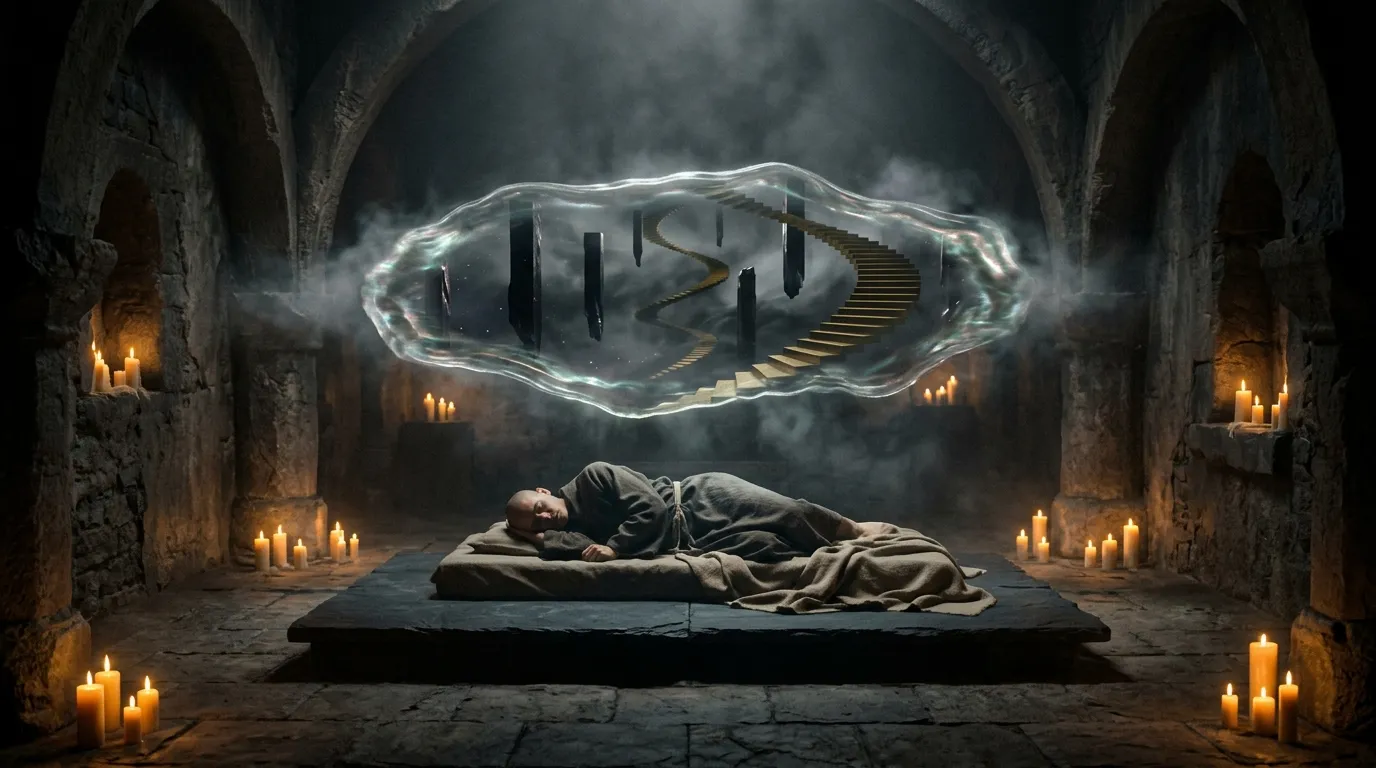
The Hypnagogic Threshold: Exploiting the 4–8 Hz Theta Window for Cognitive Reprogramming
A lucid dream occurs when the dormant dorsolateral prefrontal cortex spontaneously reactivates during REM sleep without terminating the dream state. Suddenly, an individual becomes fully awake inside the three-dimensional, sensory-rich architecture of the oneiric world. You can touch the grain of a stone wall, feel the crisp temperature of the air, and observe the dream characters, all while maintaining complete waking awareness that your physical body is resting in bed.
The key to accessing and stabilizing this state lies in the precise neuro-electrical transition between waking alertness and sleep:
Waking Ego State (Beta 13–30 Hz)
▪️ Neurological Mechanics: Dominance of the prefrontal cortex and active Default Mode Network; high sensory gating and rapid linear cognitive processing.
▪️ Psychological Function: External task execution, logical discrimination, and social persona defense.
▪️ Limitation: The critical factor acts as an impenetrable barrier, blocking direct conscious access to subconscious emotional scripts.
Hypnagogic Gateway (Alpha-Theta 7–8 Hz)
▪️ Neurological Mechanics: Transition state during sleep onset; deceleration of cortical firing, emergence of spontaneous phantasmagoric imagery, and diffuse attentional focus.
▪️ Psychological Function: Dissolution of rigid ego boundaries and direct bi-directional access to associative memory networks.
▪️ Operational Utility: The optimal neurological window for implanting intentional symbolic blueprints and prospective memory triggers.
Lucid REM State (Theta-Gamma 40 Hz Hybrid)
▪️ Neurological Mechanics: Complete somatic muscle atonia (paralysis) paired with simultaneous high-frequency 40 Hz gamma oscillations across fronto-temporal regions.
▪️ Psychological Function: Full metacognitive self-awareness inside an immersive, self-generated three-dimensional simulation of reality.
▪️ Operational Utility: Direct, real-time dialogue and integration with autonomous shadow complexes without physical nervous system strain.
Deep Somatic Restoration (Delta 0.5–4 Hz)
▪️ Neurological Mechanics: Slow-wave synchronized sleep (Stage N3); suppression of conscious awareness, massive growth hormone release, and glymphatic clearance of metabolic waste.
▪️ Psychological Function: Total somatic reset and deep unconscious memory consolidation.
▪️ Operational Utility: The biological anchor of physical vitality that makes advanced oneiric and waking focus sustainable over time.
💡 Insight: Lucid dreaming is not an escapist fantasy; it is an internal sandbox simulator. Because the motor cortex fires during dreams with the exact same electromyographic impulses as waking life (inhibited only by spinal cord motor atonia), practicing an action or confronting an emotional trauma in a lucid dream physically alters neural pathways in the waking brain.
Decoding the Dream Space: Archetypal Encounters, Shadow Figures, and Transmutation
When an individual awakens inside a lucid dream, the instinctual reaction of the unconditioned ego is often childish: attempting to fly, shoot fire from the fingertips, or manifest hedonistic fantasies. While these playful explorations demonstrate the plastic malleability of oneiric space, they overlook the true power of the medium. The dream space is not an external playground; it is the subjective interior of your own skull rendered as an interactive, three-dimensional topological territory.
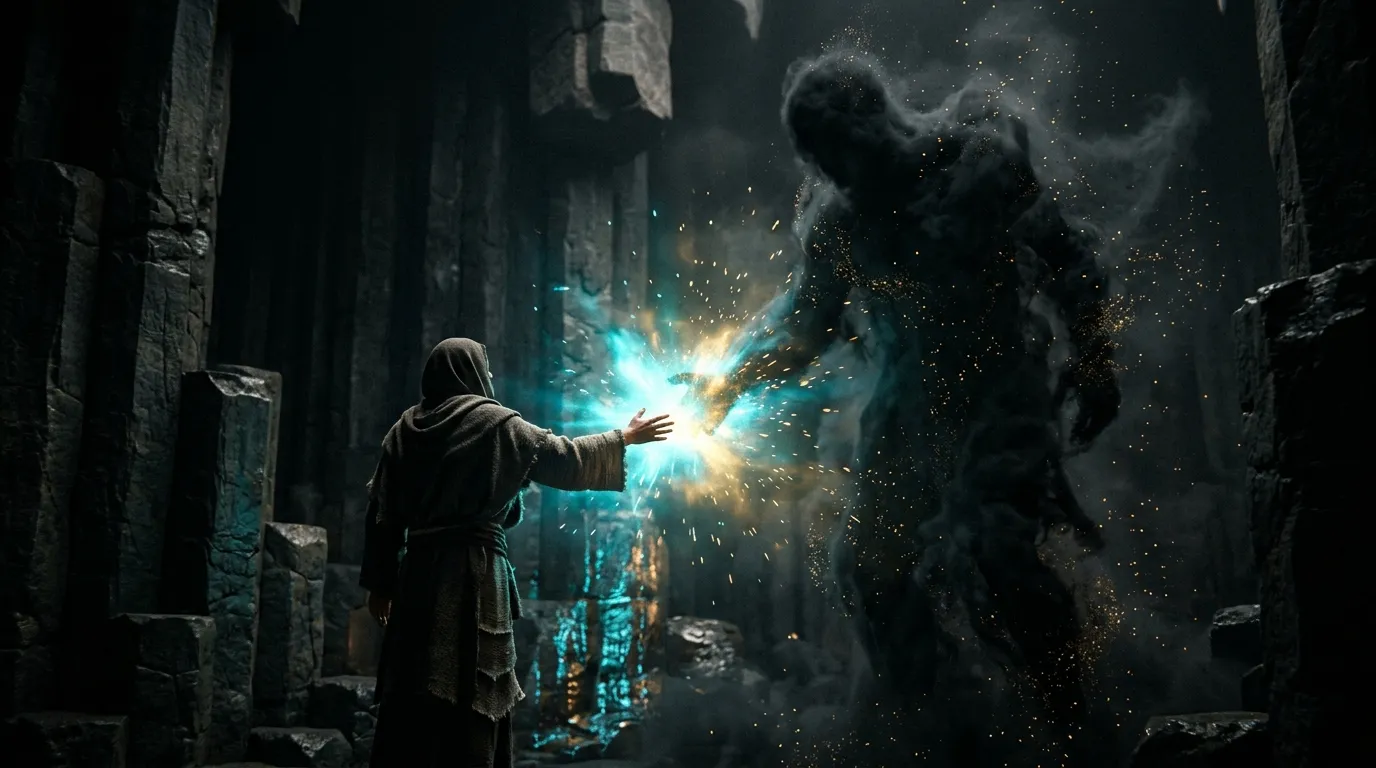
Confronting the Nightmare: Transforming Hostile Dream Characters via Compassionate Inversion
In standard waking life, psychological defense mechanisms project disowned parts of the self onto colleagues, romantic partners, or political enemies, as detailed in our analysis of Jungian Archetypes. Inside a dream, however, these psychological defense mechanisms operate without physical mediation: an unintegrated trauma, an unacknowledged rage, or a neglected talent instantly manifests as a pursuing predator, an ominous shadow figure, or a catastrophic natural collapse.
The natural biological reflex when confronted by a terrifying dream monster is to flee, fight, or force oneself to wake up. In reality architecture, every one of these reactions reinforces subconscious fragmentation:
- Fleeing from the Monster: Confirms to the subconscious amygdala that the repressed psychic complex is genuinely lethal, intensifying daytime anxiety and chronic stress loops.
- Attacking the Monster: Engages the ego in violent warfare against a split-off fragment of its own psychological energy, deepening internal neurotic conflict.
- Forcing Awakening: Abruptly cuts the communicative feedback loop, leaving the energetic charge unintegrated in the somatic nervous system.
The alchemical key—pioneered by Senoi dream masters and validated by modern depth psychotherapy—is compassionate inversion. When a terrifying shadow figure approaches you inside a lucid dream, you plant your oneiric feet, open your posture, and address the entity directly: “What part of me do you represent, and what do you need to find peace?” Clinical sleep studies demonstrate that when the dreamer replaces defensive fear with curious containment, the terrifying monster undergoes an immediate spontaneous metamorphosis: shadowy demons transform into vulnerable children, weeping ancestral figures, or guides of profound transpersonal wisdom. By embracing the figure within the dream, you permanently integrate that severed neural circuit back into the coherent whole.
The Dream Environment as an Externalized Mirror of Neural Connectivity
The terrain of the dream itself serves as an immediate visual diagnostic of your subconscious health. Dilapidated houses with locked subterranean basements reflect neglected aspects of the shadow; turbulent storm surges represent uncontained emotional affect; rigid, sterile concrete towers indicate an overly intellectualized, defensive persona cut off from somatic vitality.
By actively altering the environment inside a lucid dream—restoring structural symmetry to a crumbling room, cultivating an oasis in a sterile desert, or opening a locked door and illuminating the dark chamber with golden light—you initiate top-down neuroplastic restructuring. Because the brain’s associative memory networks process symbolic spatial manipulation as literal somatic experience, cleaning and stabilizing your inner dream architecture recalibrates the baseline autonomic tone of your waking nervous system.
🔬 Scientific Foundation: In pioneering sleep-laboratory studies conducted by Dr. Stephen LaBerge at Stanford University and later expanded by cognitive neuroscientist Dr. Ursula Voss at the University of Frankfurt, lucid dreamers demonstrated deliberate, voluntary prefrontal control while polysomnography confirmed continuous REM sleep muscle atonia. Quantitative electroencephalography (qEEG) documented sustained 40 Hz gamma oscillations across the dorsolateral prefrontal cortex and fronto-temporal regions—a distinct neuro-electrical hybrid state possessing both the vivid perceptual immersion of deep sleep and the acute metacognitive clarity of full waking awareness.
The Lucid Reality Design Protocol: A Four-Step Neuro-Oneiric Practice
To harness subconscious mind architecture for tangible waking transformation, one must bridge waking prospective memory, the hypnagogic sleep threshold, and the oneiric dream state into a continuous unbroken circuit of mindfulness.
The following four-step protocol integrates evidence-based cognitive techniques—specifically the Mnemonic Induction of Lucid Dreams (MILD) and somatic anchoring—designed to induce reliable lucidity and execute targeted internal reprogramming without disrupting restorative sleep architecture.

Step 1: Daytime Critical Reality Auditing
Lucidity during sleep is an exact reflection of metacognitive alertness during the day. If you sleepwalk through twelve hours of waking life on autopilot, your dreaming mind will naturally sleepwalk through the night.
Throughout your waking day, execute ten deliberate reality audits whenever you encounter a common environmental trigger (such as walking through a doorway, looking at your smartphone screen, or experiencing a sudden spike of emotional reactivity). Stop completely for thirty seconds. Look at the palm of your hand, count your five fingers deliberately, inspect the text of a nearby sign, look away, and look back. Ask yourself with genuine curiosity: “Am I dreaming right now?” In waking physical reality, text and anatomy remain stable; in dream space, reading a sign twice or looking at your fingers causes the digits and letters to blur, shift, or multiply. By making critical questioning an automated habitual reflex in the basal ganglia, the question will inevitably trigger automatically inside your dreams.
Step 2: Hypnagogic Intention Imprinting
As you lie in bed preparing for sleep, adopt a symmetrical supine posture (lying flat on your back or right side with the spine aligned). Breathe slowly into your lower abdomen to stimulate parasympathetic tone, as practiced in Somatic Internal Alchemy.
As your thoughts begin to drift into hypnagogic daydreams, do not passively lose consciousness. Formulate a single, concise prospective memory phrase: “Tonight, when I am dreaming, I will remember that I am dreaming.” Repeat this phrase silently on each exhale, visualizing yourself becoming lucid inside a familiar dream setting. Accompany the phrase with a specific operational goal: for example, confronting a recurring anxiety trigger, asking a dream guide for clarity on a life purpose vector, or visiting a consecrated internal sanctum of stillness. Allow yourself to drift into sleep while holding this singular intention at the center of your awareness.
Step 3: Stabilization and Cognitive Lucidity Anchoring
The moment your critical consciousness awakens inside the dream, an immediate physiological challenge arises: the sudden spike of adrenaline and emotional excitement threatens to wake your physical body up.
Do not sprint, fly, or shout. Instantly drop your oneiric gaze to the ground. Drop to your knees and rub your two dream hands together vigorously, feeling the friction and warmth of your palms. Touch the physical texture of the dream floor—whether it is cold marble stone, rough granite, or moist earth. Look at your hands and spin your oneiric body around in a slow three-hundred-and-sixty-degree circle. This physical sensory engagement floods the vestibular and kinesthetic networks of the brain, stabilizing the oneiric simulation and preventing premature awakening. Once the dream space crystallizes into high-definition clarity, pronounce your intent aloud: “Clarity now. Complete conscious stability.”
Step 4: Morning Archetypal Extraction and Somatic Bridging
The most critical phase of reality architecture occurs in the first sixty seconds after waking. The transition from REM sleep to waking beta is accompanied by a rapid flush of acetylcholine, causing dream memories to evaporate from short-term memory within minutes.
Upon waking, keep your physical eyes closed and remain completely motionless in bed for ninety seconds. Do not reach for your phone or review your morning schedule. Re-trace the memory of the dream backward from its conclusion to its beginning, anchoring the sensory details in your mind. Open your eyes and immediately record the experience in a dedicated dream journal, noting three specific dimensions: the archetypal characters encountered, the emotional charge felt in your physical body, and the symbolic resolution achieved. By writing down the oneiric architecture, you ground the neural reconfiguration permanently into waking neuroplastic circuitry.
Frequently Asked Questions About Subconscious Reprogramming and Lucid Dreaming
Is lucid dreaming safe for individuals dealing with active psychological trauma?
Lucid dreaming is a potent neurological intervention and should be approached with grounded stability. For individuals navigating active post-traumatic stress disorder (PTSD), severe dissociative conditions, or unmanaged psychosis, spontaneous lucid dreams can occasionally blur the boundary between waking reality and subconscious imagery. However, when practiced with proper stabilization protocols and compassionate shadow integration, clinical trials show that lucid dreaming significantly reduces chronic nightmare frequency by empowering individuals to master their internal responses to threatening dream scenarios. Beginners should always establish somatic grounding and nervous system regulation before attempting advanced oneiric practices.
How does active imagination differ from simple daydreaming or creative fantasy?
Simple daydreaming is an involuntary, passive escape where the conscious ego indulges in wish-fulfillment while remaining detached from emotional responsibility. In sharp contrast, Carl Jung’s method of Active Imagination requires acute, focused conscious participation. You do not dictate the actions of the figures that appear; you allow autonomous psychic complexes to speak their own unvarnished truth, even when their messages challenge, disturb, or dismantle your conscious ego defenses. Active imagination is an ethical and psychological confrontation, not an entertainment fantasy.
Why do positive affirmations spoken in waking life so frequently fail?
Waking verbal affirmations fail because they must pass through the prefrontal cortex’s critical gatekeeping filter—a cognitive mechanism designed to reject any statement that contradicts existing autobiographical memory and core subconscious beliefs. When a person experiencing severe financial distress affirms ‘I am effortlessly wealthy,’ the subconscious immediately registers the statement as factually false, triggering an involuntary autonomic stress response that reinforces feelings of fraudulence. Reprogramming requires bypassing linguistic filters by accessing the alpha-theta state (4–8 Hz) and communicating through multi-sensory symbolic imagery and somatic emotion.
What is the difference between sleep paralysis and the lucid dream transition?
Sleep paralysis and the transition into a lucid dream share the identical underlying biological mechanism: REM atonia—the natural neurological blockade of spinal motor neurons preventing the physical body from acting out its dreams. In sleep paralysis, conscious awareness wakes up before the brain has begun generating a stable oneiric simulation, leaving the person feeling trapped inside a paralyzed physical body, often triggering primal amygdala panic. In a conscious exit (WILD: Wake-Initiated Lucid Dream), the practitioner learns to remain somatically calm during this paralysis threshold, allowing the hypnagogic imagery to coalesce smoothly into a fully navigable three-dimensional dream world.
Can practicing lucid dreaming cause chronic daytime sleep deprivation?
When practiced using hyper-aggressive techniques such as setting multiple abrupt alarms throughout the night (excessive Wake-Back-To-Bed protocols), sleep continuity can indeed suffer. However, lucid dreaming itself takes place during naturally occurring REM sleep cycles and does not inherently degrade sleep quality. In fact, electroencephalographic studies confirm that lucid dreamers frequently wake with elevated mood, heightened cognitive clarity, and a profound sense of psychological integration, as the resolution of internal conflicts during sleep reduces chronic sympathetic nervous system exhaustion.
How long does it typically take to achieve the first stable lucid dream?
For individuals practicing daily reality checks, prospective memory intention setting (MILD), and dream journaling, the first stable lucid dream typically occurs within two to four weeks. Achieving consistent, on-demand lucidity—occurring multiple times per week—requires approximately three to six months of dedicated daily practice. Consistency in morning dream recall is the primary determining factor: if you do not remember your dreams, you can become lucid multiple times each night without ever retaining the memory in waking consciousness.
Conclusion: Becoming the Master Architect of the Dream and the Waking World
To view the sleeping third of human existence as wasted time is to remain an exile from the deepest chambers of your own mind. The bedroom is not merely a station for biological repair; it is a consecrated laboratory where the unconscious self lays bare the blueprints of your fears, your unprocessed history, and your unexpressed evolutionary potential.
The division between the dreaming mind and waking physical life is far more permeable than materialistic dogma acknowledges. The exact same neural networks that construct the three-dimensional reality of your dreams tonight are filtering and projecting your perception of waking life tomorrow morning. By mastering subconscious mind architecture, you cease to be a passive passenger swept along by automatic defensive reflexes. You awaken to your true station: the conscious, sovereign architect capable of transforming the inner landscape of the soul and watching the outer geometry of reality rearrange itself in alignment.
Enter the Arcana Visio Sanctum

Deepen your exploration of archetypal systems, esoteric geometry, and sovereign reality design through our dedicated study spaces:
- Arcana Visio Sanctum on Patreon: Join our private study community for practitioners exploring depth psychology, internal alchemy, and reality architecture. Access monthly visual PDF Grimoires, advanced operative protocols, guided somatic audio practices, and ongoing research archives at patreon.com/c/ArcanaVisio.
- NAVIGATOR: 12 Keys to Yourself: Ready to decode the exact financial triad, karmic tail, and core life-purpose codes encoded in your unique natal geometry? Order your personalized, high-ticket Destiny Matrix diagnostic manual on Etsy or explore the complete methodology at arcanavisio.com/navigator/.
- The Arcana Visio Dispatch (Newsletter): Receive our weekly long-form essays, practical somatic protocols, and private releases on depth psychology, cosmic cycles, and consciousness architecture directly to your inbox via arcanavisio.substack.com.
